
Psychosocial risk assessment
Understand and improve well-being across your organization
Observatorio de Bienestar is a psychosocial risk assessment model tailored to each organization: a questionnaire designed and validated for your reality, a dashboard to explore the results, and consulting to turn them into action.
Human Resources Occupational health and safety Leadership and strategy Health and safety committees
Lower costs, fast rollout
A modular, plug-and-play solution: the core adapts to each organization in a matter of weeks.
Independent, specialist consulting
We support HR and occupational health and safety teams to ensure the analysis and its results are sound and relevant.
Coming next: benchmarking
The option to take part and compare yourself with other companies in your industry.
The challenge
Measuring psychosocial factors accurately is not simple
Organizations face several challenges when it comes to accurately measuring the psychosocial factors that shape their employees' well-being.
Tailored questionnaires are missing
The questionnaires available are standardized, so they cannot give an answer that fits each organization's reality.
A box-ticking approach
The usual approach focuses on legal compliance and is reactive, rather than proactive and strategic.
Technical hurdles
Ensuring statistical validity without time bias, presenting data that is usable and actionable, and sharing the results with everyone involved in the organization simply and securely.
Our answer
That is why we built Observatorio de Bienestar
Observatorio de Bienestar, our workplace well-being observatory, is a psychosocial risk assessment model tailored to each organization.
It lets you understand and improve your employees' well-being, and helps bring greater efficiency and harmony to the workplace.
Who it is for
One measurement, three perspectives
The results support psychosocial management at different levels and in different areas of the organization, and can be presented in full to third parties: the labor inspectorate (Spain's Inspección de Trabajo), health and safety committees or management committees.
Occupational health and safety
Psychosocial risk assessments built on a validated model adapted to your organization's specifics, plus advice on how to run them and on legal compliance.
Human Resources
Indicators to optimize and align your HR policies, and to cross-reference with turnover, satisfaction, workplace climate or employee experience.
Leadership and strategy
Psychosocial indicators correlated with health, HR and business indicators, so strategic goals line up with those of the people on your teams.
What it measures
From risk factor to management indicator
The model turns psychosocial risk assessment into something tangible: indicators you can look up, compare and relate to the rest of the organization.
Psychosocial factors
The aspects of working conditions that, depending on how they are managed, affect workplace well-being and the overall health of an organization's people, for better or for worse.
Analysis variables
Indicators are measured and broken down by whichever employment or demographic variables each organization needs: sex, age, length of service, occupation, region and so on.
Risk level, color-coded
Green, adequate situation; yellow, moderate risk; red, significant risk.
Links to other indicators
Psychosocial management indicators can be correlated with health, HR and business indicators.
How it works
From initial consulting to an action plan
Initial consulting
Before rollout, we design a methodology that is adapted, standardized and validated for your company's nature and psychosocial context.
A tailored questionnaire
We design and validate a questionnaire adapted to your organization's reality.
Technical and analytical support
We run specific analyses, such as natural language processing of free-text answers and correlation between factors.
Dashboard
We build a dashboard that lets you explore the data and the analyses quickly and easily, moving between the different dimensions.
Follow-up consulting
After rollout, we turn the conclusions into actions your organization can actually implement.
Our services
A model built on four branches
Our psychosocial risk assessment model is built on four branches: methodology, technology, value and commitment.
This branch develops a psychosocial assessment model that starts with a preliminary technical analysis by our experts, followed by a questionnaire built for each organization.
The questionnaire meets every requirement for reliability and statistical validation: we run the relevant multivariate tests and correlations, with reference to national and international standards, to guarantee the quality of a scientific process.
Specifically, this branch lets us:
- Advise on how best to run psychosocial risk assessments in organizations, and on legal compliance.
- Design a validated psychosocial assessment model adapted to each organization's specifics.
- Carry out collegiate psychosocial risk assessments in any type of organization.
Technology and data management. This branch presents the model's results in a BI portal: a dashboard with the psychosocial management indicators, measured and broken down by whichever employment or demographic variables each organization requires (sex, age, length of service, occupation, region and so on).
It is a major step up from other psychosocial assessment models: it provides tangible indicators that show the psychosocial diagnosis clearly and concisely, and lets you correlate them with health, HR and business indicators, with all the strategic value that brings.
The dashboard organizes the data with drop-downs and whatever filters each case calls for, always on a color-coded basis: green, adequate situation; yellow, moderate risk; red, significant risk. That makes psychosocial management easier at different levels and in different areas (occupational health and safety, HR, business strategy), and allows a complete presentation of results to third parties: the labor inspectorate, health and safety committees, management committees and so on.
Specifically, this branch lets you:
- See the results of the psychosocial risk assessment in tangible terms.
- Make comparisons: across the employment and demographic variables analyzed, between business units and between different periods of time.
- Identify the predominant risk factors in an organization.
- Point to the possible causes of psychosocial risks for each unit studied.
- Establish which profiles in the study population carry the highest psychosocial risk.
Competitiveness, value and external appeal. This branch proposes strategic solutions made to measure for each organization, based on the earlier units of analysis, which have a demonstrated impact on workplace well-being and on an organization's overall health.
With this branch, Observatorio de Bienestar becomes a reliable, competitive tool with a strong impact on management and on the image the organization projects to internal and external customers, suppliers, partners and investors, public authorities, health and safety committees and so on.
Specifically, this branch connects with:
- The strategic plans needed at each level of the organization, and the actions that follow from them.
- The quality-of-working-life, engagement and leadership models best suited to each case.
- The challenges of managing remote teams: training remote leaders, organizational culture, support for new employees, readiness assessment and strategy for remote transformation.
- Some of the Sustainable Development Goals (SDGs), in particular SDG 3 (good health and well-being), SDG 5 (gender equality) and SDG 8 (decent work and economic growth).
- The Estrategia Española de Seguridad y Salud en el Trabajo 2023-2027 (Spain's national occupational safety and health strategy), in particular its objectives O2 (managing the changes brought by new forms of work organization, demographic change and climate change), O4 (strengthening protection for workers at greater risk or in vulnerable situations) and O5 (bringing a gender perspective into occupational safety and health).
- The European ESRS standards proposed under the CSRD (Corporate Sustainability Reporting Directive), which apply between 2024, 2025 and 2026 depending on the business model. Our model connects with the ESRS on social and governance matters.
Commitment to managing the model as a whole. This branch steers the organization toward a commitment that goes further on workplace well-being and overall health: correlating the organization's strategic data with the data gathered through Observatorio de Bienestar and drawing cross-cutting conclusions, in pursuit of the highest standard of efficiency.
In practice, that means reliable cross-cutting analyses and triangulations of which aspects matter most for managing the business efficiently and as a whole. Some of the indicators the model proposes triangulating with Observatorio de Bienestar data:
HR indicators: turnover rates, satisfaction and motivation scores, workplace climate and employee experience surveys.
Business management indicators: productivity, recommendation, reputation and engagement scores.
Health and safety indicators: the Total Health Test (test de salud total), absenteeism and accident rates.
Depending on each organization's needs, the commitment branch lets you:
- Pin down the organizational KPIs with the greatest impact on workplace well-being, organizational health and the business.
- Find out which leadership and motivation styles correlate most with workplace well-being, overall health and the business.
- Spot good organizational practices and assess whether they can be extended across the organization.
- Optimize and align your own HR policies, as well as those on CSR, compliance, ethics and reputation.
- Align the business's strategic goals with those of the people who make up its teams.
- Forecast how psychosocial factors and risks are likely to evolve.
- Detect and anticipate situations of conflict and violence at work: mobbing, sexual harassment, sex-based harassment, occupational violence, inequality and discrimination in the workplace, and labor disputes.
- Detect, anticipate and help reduce the impact psychosocial risks can have on people's health, such as work-related stress or burnout, and so improve their quality of working life.
- And on society's health, by reducing personal, family, healthcare and social costs.
- And on corporate health, by reducing the impact of these risks on staff motivation and turnover, absenteeism, business productivity and profitability, corporate reputation, compliance and CSR policies, and workplace accidents and disputes.
Two key processes
Assess and improve, in two processes
Two key processes for assessing and improving workplace well-being and organizational health: first the psychosocial questionnaire, then the dashboard.

Psychosocial questionnaire
We design and validate a psychosocial questionnaire adapted to each organization's reality to measure its workplace well-being and organizational health, using a methodology that is adapted, standardized and validated for the company's nature and psychosocial context.
Dashboard
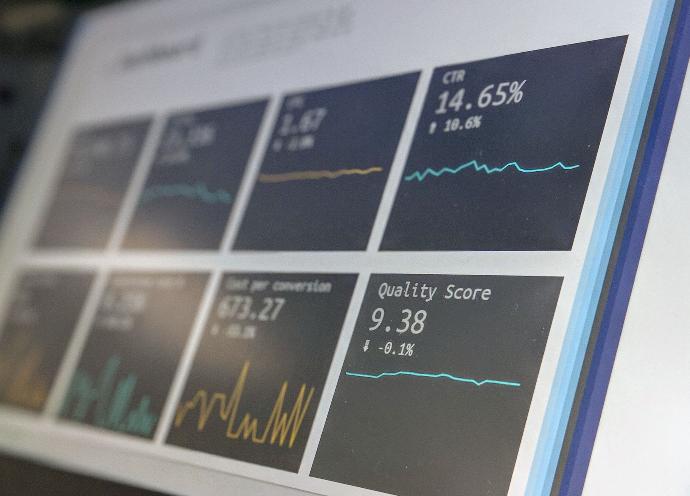
A dashboard of psychosocial management indicators that lets you explore the data and the analyses quickly and easily, moving between different dimensions.
Cases
People analytics, in real projects
Projects by Singular Beacon, the consulting firm behind Observatorio de Bienestar, in organizational well-being, people and data.
Demo
See it for yourself in the demo
The demo brings together the tool's two parts: the psychosocial questionnaire and the dashboard.
Our team
A multidisciplinary team
Our team brings together professionals with extensive work and academic experience, in Spain and internationally, in end-to-end organizational management and university teaching. It includes PhDs specializing in psychosociology, business management, HR and occupational health and safety, as well as lawyers, psychologists, engineers, sociologists and labor relations graduates.
The Singular ecosystem
Who is behind it, and what comes after measuring
Observatorio de Bienestar is part of the Singular Beacon ecosystem. It is a Singular Beacon product, built on Singular Beacon's technology and analytics, and the whole group is explained at The Beacon Holding.
Singular Beacon
Data strategy and digitalization consulting, and an Odoo partner. It provides the technology and the analytics behind Observatorio de Bienestar, which is why our logo reads “powered by Singular Beacon”.
Technology and analytics
The Singular Academy
Online courses at your own pace and in-person training in Madrid, with practicing consultants. If the assessment points to leadership, communication or teamwork, its courses Competencias de Gestión (Management Skills) and Ética y Valores en las Organizaciones (Ethics and Values in Organizations) help you train your managers.
Training
Profesionales Excepcionales
Weekly interviews, in Spanish, in which Javier Pascual talks to leading professionals in engineering, business and technology. Guests have included specialists in organizational well-being and in occupational health and safety.
Singular Works
Meet The Beacon Holding Ethics and Values in Organizations course
Contact
Let's talk about well-being in your organization
If you want to work on well-being in your organization, book an online meeting or send us a message using the form. A specialist will get in touch with you.
- You will get a reply in under 24 hours.
- Completely free, with no obligation.